# Do You Need Protein Powder If You Already Lift?
Before you buy another tub of protein powder, take a closer look at what's already on your plate.
You finish your workout, put down the dumbbells, and reach for your protein shake.
It feels like the natural next step. After all, protein helps support muscle growth, and nearly every fitness influencer seems to have a favourite powder.
But here's a question worth asking: Do you need protein powder if you're already lifting weights and eating protein-rich meals?
The answer isn't automatically yes.
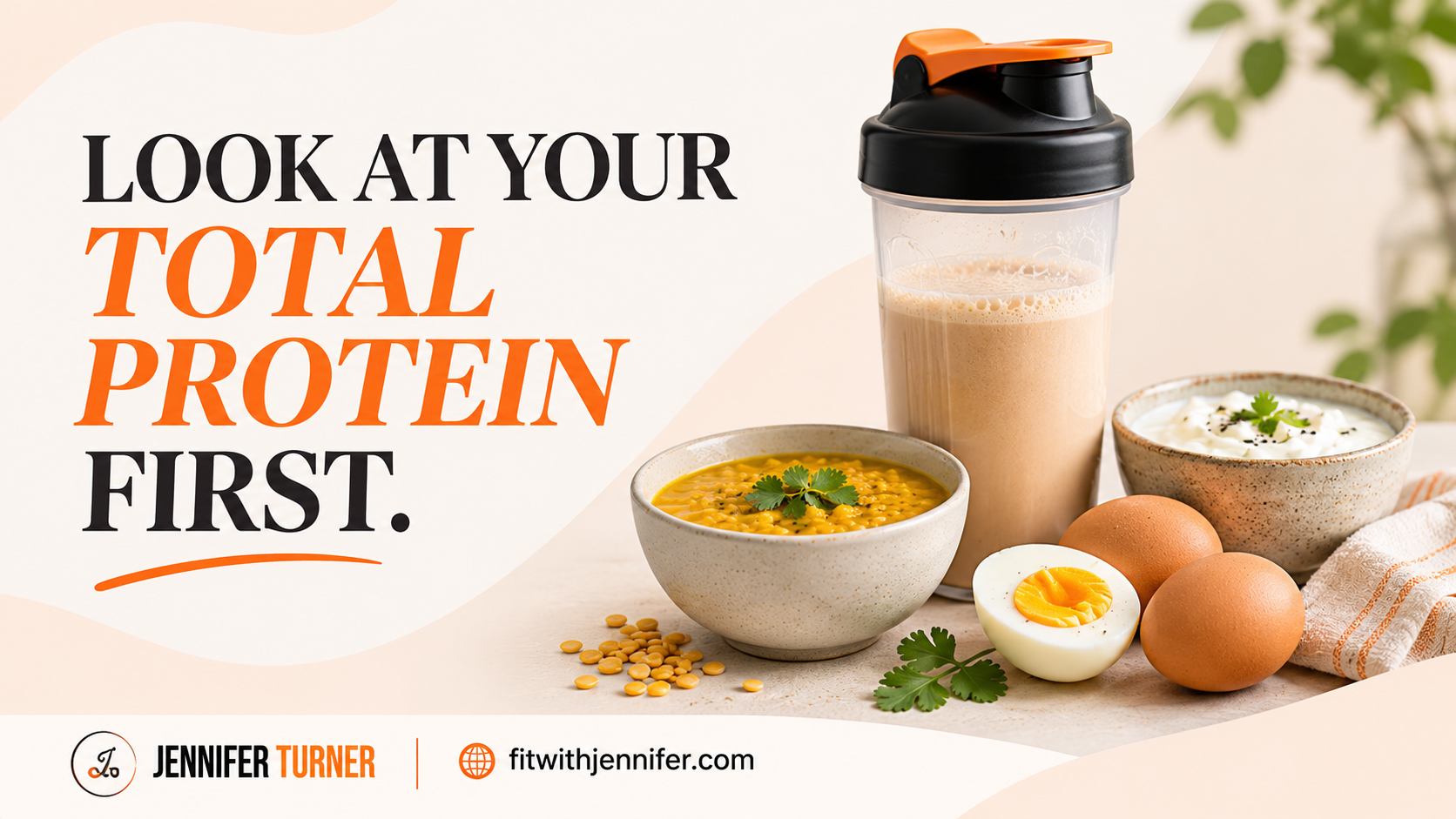
Protein matters for building and maintaining muscle. But protein powder is simply one way to get it. Whether it adds anything meaningful to your training depends largely on how much protein you already consume throughout the day.
What Does the Research Actually Say?
A major systematic review and meta-analysis examined whether protein supplementation improves the results of resistance training.
The researchers pooled evidence from 49 randomized controlled trials involving 1,863 participants, including healthy adults with different levels of resistance-training experience.
The findings were encouraging, but more nuanced than many supplement advertisements suggest.
Adding protein supplementation to resistance training produced modest additional improvements in muscle size and strength on average.
The analysis also found that the benefit for gains in fat-free mass appeared to level off as total daily protein intake increased.
The researchers estimated that consuming more than approximately 1.6 grams of protein per kilogram of body weight per day did not produce further average gains in fat-free mass in their analysis.
That does not mean 1.6 g/kg is a strict biological limit for every person. Individual needs vary, and the estimate has uncertainty.
Importantly, the study investigated protein supplementation alongside resistance training. It did not establish that protein powder is superior to getting adequate protein from ordinary food.
Protein Powder Isn't the Same as Protein
Your muscles don't require a particular brand of powder.
They require sufficient dietary protein, which supplies the amino acids involved in repairing and building muscle tissue.
For adults in India, protein can come from many familiar foods, including:
- Milk, curd and paneer: Familiar dairy-based protein sources that can fit into everyday meals.
- Eggs: A convenient source of high-quality protein.
- Chicken and fish: Protein-rich options for people who eat non-vegetarian food.
- Soybeans, tofu and soy chunks: Useful plant-based protein sources.
- Dal, chickpeas and rajma: Everyday Indian foods that contribute protein alongside other nutrients.
- Nuts, seeds and whole grains: Foods that provide additional protein as part of a balanced diet.
These foods differ in protein concentration, amino acid composition and digestibility. That means portions and food combinations matter, especially when planning a vegetarian diet.
A protein supplement can be convenient, but convenience should not be confused with necessity.
How Much Protein Might You Actually Need?
For healthy adults who regularly lift weights, approximately 1.4–2.0 grams of protein per kilogram of body weight per day is a commonly used sports-nutrition range.
The 1.6 g/kg figure from the meta-analysis is a useful reference point, not a mandatory target for everyone.
Here's what that amount looks like at different body weights:
- 50 kg body weight: Approximately 80 g of protein per day.
- 60 kg body weight: Approximately 96 g of protein per day.
- 70 kg body weight: Approximately 112 g of protein per day.
- 80 kg body weight: Approximately 128 g of protein per day.
- 90 kg body weight: Approximately 144 g of protein per day.
These are illustrative calculations, not individualized prescriptions.
Your training goals, overall diet, age and health circumstances can affect what is appropriate.
The important lesson is that your protein intake should be considered in the context of your individual needs, not simply copied from a supplement advertisement.
A Realistic Example: An Indian Professional Who Lifts Weights
Meet Rahul, a 70 kg working professional in Ahmedabad.
He trains with weights four times a week. His goal is to improve strength and gradually build muscle.
Like many busy professionals, Rahul has a demanding schedule. Between office meetings, family responsibilities and workouts, he wants his nutrition to be simple and practical.
Using 1.6 g/kg as a reference, his daily protein target would be approximately 112 g.
Instead of immediately buying a supplement, Rahul reviews a typical day of eating.
Breakfast
Rahul starts his morning with three eggs and a glass of milk.
- 3 eggs: Approximately 18 g of protein.
- 250 ml milk: Approximately 8 g of protein.
Breakfast total: Approximately 26 g.
Lunch
At lunchtime, Rahul eats paneer with two chapatis.
- 100 g paneer: Approximately 18 g of protein.
- 2 chapatis: Approximately 6 g of protein.
Lunch total: Approximately 24 g.
Afternoon Snack
During his afternoon break, Rahul has a bowl of plain curd.
- 200 g plain curd: Approximately 7 g of protein.
Snack total: Approximately 7 g.
Dinner
After work, Rahul enjoys a home-cooked dinner.
- 150 g cooked chicken: Approximately 46 g of protein.
- 1 chapati: Approximately 3 g of protein.
Dinner total: Approximately 49 g.
What Does Rahul's Full Day Tell Us?
When Rahul adds everything together, his estimated daily protein intake is approximately 106 g.
His illustrative reference target was 112 g.
That means he is already close to the amount he was aiming for.
Does Rahul really need protein powder?
Not necessarily.
He could make a small adjustment to his regular meals instead of purchasing a supplement.
Now imagine a different situation.
Rahul regularly skips breakfast, has limited time to prepare meals and struggles to meet his protein needs.
In that case, a protein shake might be a practical option.
The difference is not how seriously he trains. It's whether the supplement fills a genuine gap in his diet.
Note: These food values are approximate. Actual protein content varies with ingredients, brands, cooking methods and serving sizes. This example is for education, not an individualized meal prescription.
When Protein Powder Might Be Useful
Protein powder is not automatically necessary, but it can be useful in certain situations.
From a practical coaching perspective, supplementation may be worth considering when:
1. Your Meals Consistently Fall Short
You may be eating balanced meals but still finding it difficult to consume enough protein for your training goals.
A supplement can provide an additional source of dietary protein without requiring another full meal.
2. You Have a Busy Schedule
Between work, travel, family commitments and exercise, preparing protein-rich meals may sometimes be inconvenient.
A protein shake can be an easy option when regular food is difficult to arrange.
3. You Follow a Vegetarian or Vegan Diet
Vegetarian and vegan diets can provide adequate protein, but planning portions and choosing suitable food combinations may require extra attention.
Protein supplements can be one convenient option, particularly when usual food choices are limited.
4. You Prefer a Convenient Post-Workout Option
Some people enjoy having a shake after training because it is easy to prepare and consume.
However, drinking protein immediately after every workout is not a universal requirement.
Your overall daily protein intake remains an important consideration.
These are practical coaching suggestions rather than specific findings tested by the meta-analysis.
What If You Already Eat Enough Protein?
Imagine two people following similar strength-training programmes.
Both train consistently and consume sufficient protein for their individual needs.
One gets protein from regular meals. The other also drinks a protein shake every day.
Would the person using protein powder automatically build more muscle?
No.
The research does not establish that adding powder on top of an already sufficient protein intake guarantees additional muscle growth.
Protein supplementation can be helpful when it increases an otherwise insufficient intake.
But once overall protein intake is adequate, additional protein may provide diminishing benefits for resistance-training adaptations.
This is why it makes sense to evaluate your full diet before deciding whether supplementation is worthwhile.
What Should You Check Before Buying Protein Powder?
At Fit With Jennifer, a sensible starting point is to understand your daily eating pattern rather than choosing a supplement first.
For a few typical days, record what you eat, including approximate quantities.
Look at breakfast, lunch, dinner and snacks.
Then ask yourself three important questions:
1. How much protein am I already getting?
Identify the protein sources in your usual meals and estimate their contribution.
2. Is there a consistent gap between my intake and my needs?
A single low-protein day does not necessarily mean you need a supplement. Look at your overall eating pattern.
3. Would adjusting meals be practical, or would a supplement genuinely make life easier?
Sometimes adding curd, paneer, eggs, tofu or another suitable protein-rich food is enough.
Other times, a supplement may be more convenient.
If you decide to buy protein powder, compare the protein per serving, ingredients, cost and product quality rather than relying on marketing promises.
People with kidney disease or other medical conditions requiring dietary protein management should seek individualized medical or dietetic advice before substantially increasing protein intake.
The Takeaway: Food First, Supplements When Useful
Do you need protein powder if you already lift? Not necessarily.
Research suggests that additional protein can modestly improve resistance-training results, but the benefit for fat-free mass becomes smaller as total protein intake rises.
The more useful question isn't whether you own a protein shaker.
It's whether your daily meals provide enough protein to support your training.
Before investing in another supplement, invest a little time in understanding your nutrition.
Look at what you eat.
Understand what you need.
Identify what's missing.
Then decide whether protein powder has a meaningful role.
Your progress is built through consistent training, adequate nutrition and habits you can sustain—not through a particular tub of powder.
Stay Informed With Fit With Jennifer
Fitness advice should help you make confident decisions, not pressure you into unnecessary purchases.
At Fit With Jennifer, we believe that understanding the science behind fitness can make everyday choices simpler and more meaningful.
Follow the Fit With Jennifer WhatsApp Channel for:
- Evidence-informed fitness and nutrition education.
- Practical strength-training guidance.
- Simple explanations of exercise and nutrition research.
- Everyday habits that support a healthier, more active lifestyle.
Because understanding your body is just as important as training it.
Fit With Jennifer — Stronger Through Knowledge.
Visit www.fitwithjennifer.com to explore our coaching approach.
---
Research References
1. Protein Supplementation and Resistance Training
Morton RW, et al. (2018).
A systematic review, meta-analysis and meta-regression of the effect of protein supplementation on resistance training-induced gains in muscle mass and strength in healthy adults.
British Journal of Sports Medicine, 52(6), 376–384.
Study type: Systematic review, meta-analysis and meta-regression.
Study population: 1,863 participants across 49 randomized controlled trials involving resistance training.
Key findings:
- Protein supplementation produced modest additional gains in fat-free mass and strength alongside resistance training.
- The pooled average additional improvement in fat-free mass was approximately 0.30 kg.
- The pooled average additional improvement in one-repetition-maximum strength was approximately 2.49 kg.
- Gains in fat-free mass appeared to plateau at around 1.6 g/kg/day of total protein intake.
These findings describe average results across studies, not guaranteed outcomes for every individual.
Original research:
https://pubmed.ncbi.nlm.nih.gov/28698222/
2. Protein Intake Recommendations for Exercising Adults
Jäger R, et al. (2017).
International Society of Sports Nutrition Position Stand: Protein and Exercise.
Journal of the International Society of Sports Nutrition, 14, 20.
This position stand provides context for commonly used daily protein intake recommendations among healthy exercising individuals.
Reference:
https://doi.org/10.1186/s12970-017-0177-8
---
Disclaimer: This article is intended for general fitness and nutrition education. Individual nutritional requirements vary. The information should not replace personalized advice from a qualified healthcare professional or registered dietitian.